



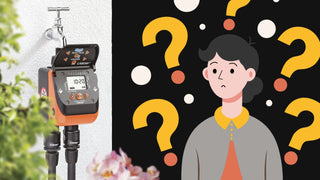
When summer arrives, watering the garden or vegetable patch can become a real challenge. Plants need regularity, but we don't always have the time (or desire) to deal with taps, schedules, and watering shifts. This is where a simple and effective ally comes into play: the irrigation timer.
What is a timer and why use one?
A timer is a device that connects to the water tap and allows you to automate the irrigation system, programming times, duration, and frequency.
It is ideal for both fixed systems (with control units and drippers) and simple solutions such as watering with a hose and spray gun.
The main advantages?
- No more forgetting: irrigation starts and stops by itself.
- Less waste: water only when needed, at the right time.
- Better plant health: regular and optimized irrigation.
- Time saving: everything automated, even if you're on holiday.
Which type of timer to choose?
There are various models on the market, and the choice depends on the type of space and your needs.
1. Mechanical timers
Simple to use, they work with a dial and set short sessions (up to 2 hours). Excellent for occasional use.
2. Digital timers
They allow you to program multiple cycles per day, with precision on days, times, and duration. Ideal for vegetable patches, gardens, balconies with many plants, or complex irrigation systems.
3. Timers with sensors
Some models integrate humidity or rain sensors to interrupt irrigation when not needed. Perfect for those looking for efficiency and sustainability.
An extra tip: water at dawn or dusk
The best times to water are the early morning hours or late evening. Water evaporates less, penetrates the soil better, and plants benefit more.
With a timer, you can set the right time without having to set an alarm!